Credibility of the Umboi Island Eyewitnesses

Why we believe eyewitnesses who report a giant ropen and describe it in terms suggesting a pterosaur
Gideon Koro Interview, 2004
Do pterosaurs still live? Are they extant, even in the 21st century?
Don’t rush to any conclusion; get the facts, then judge credibility.
According to Jonathan David Whitcomb (a legal videographer in
Long Beach, California, at the time he gave this report):
“On October 7, 2004, I left the Gomlongon Village [Umboi Island,
Papua New Guinea] area with my interpreter and some local guides.
We arrived at Akure Village, giving almost no notice to the locals,
who were unaccustomed to seeing a white-skinned man.
“I waited there while someone was sent to get Gideon. It is very
unlikely he had time to prepare for the interview, yet he was at ease
being questioned while being videotaped about his experience en-
countering the giant ropen about ten years earlier.
“He acknowledged that he had been interviewed before. I had studied
his previous video-recorded testimony and noticed that he was much
more at ease than he appeared to be years earlier.
“It should be noted that the previous interview may have taken place
soon after the sighting itself took place, so he may have been nervous
being interviewed on camera [the first time].
“These villagers have probably never seen a movie or television [show]
or even a live dramatic play. They are unaware of acting techniques in
the way Westerners are. The many facial expressions of Gideon during
our videotaped interview were highly consistent with his verbal answers.
He was not play acting.
“There is no reasonable possibility that he was willfully giving false
information and that he had not seen any creature like the one he
described. I interviewed him in front of the villagers who knew him.
After I asked him the length of the tail of the ropen, he looked back
and forth at the ground for a few moments and then he looked back
at me and answered emphatically, “sefan meetuh” (seven meters).
He was surely doing this to get a feel for both what the tail would
have looked like if it were stretched out on the ground and then to
estimate the length. . . .
“In regard to any possibility that he firmly believed in a creature that
he thought he saw but which was only . . . an illusion or dream, we
need to consider a broad perspective on this sighting. A specific
hallucinated image does not affect a group but is experienced by an
individual. The ropen sighting involved seven boys. They ran home
in terror after the sighting.
“Wesley, the brother of Gideon, described the ropen to me and I was
able to videotape his answers. Likewise, another of the witnesses, Mesa,
told me that he saw the ropen at that time. These videotaped interviews
are available to all who would like to examine them. What these young
men described to me was no dream or hallucination.”
See also Ropen Credibility

copyright 2007-2017 Jonathan David Whitcomb

Some natives report a flying light at night, others report what other eyewitnesses have told them, but a few report a huge featherless flying creature in clear daylight




Michael answered Jonathan Whitcomb’s questions about the
ropen: The flying creature robbed a grave in Gomlongon (1949)
“In December, 1997, my husband and I both sighted a huge
creature flying over a densely populated area, while we were
out walking one night in Perth . . . Australia, on the coastline
around 10:30 pm.”
“Garth Guessman, a living-pterosaur investigator, interviewed
three Americans who had worked in or visited a medical mission
in Central New Britain Island, Papua New Guinea. . . .” [They
had at least three separate sightings, in daylight, of big apparent
pterosaurs, although the flying creatures were apparently not
ropens, for the did not have long tails.]
“Animals that are classified as cryptids seem to be known through
stories or through a limited number of eyewitnesses.”
“An Australian [expert on birds], Mr. Fred F. Silcock, declares
that a few barn owls (Tyto Alba), on rare occasions, glow with
intrinsic bioluminescence.”
Hoaxes (or not)
“In 1856, according to The Illustrated London News (newspaper)
at the time, men working on a tunnel in France discovered a living
pterosaur (by whatever name) . . . is now believed by many to be
a hoax.”

When Whitcomb asked him about
the length of the tail, the native
looked away to imagine the tail
and then estimated its length. This
was done in a highly credible way.
Wesley’s testimony agreed with
Gideon’s and was consistent in
manner and content (credible)
Gideon Koro, of the Akure
Village area of Umboi Island,
Papua New Guinea (2004)
Mesa verified that what Gideon said
was true. Although he was nervous
while talking about the creature, his
testimony is considered credible.
When asked if the creature had
any feathers, Gideon showed
nonverbally that he considered
the question strange: He said,
“There’s no feathers.”
Eyewitness descriptions are consistent:
Most of the natives on Umboi Island
see only a distant low-elevation flying
light that lasts about 5-6 seconds. The
islanders who get a closer and clearer
view of the ropen, however, tell us it
is a large long-tailed flying creature.

Let’s try to be objective about reports
of apparent modern pterosaurs
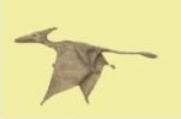
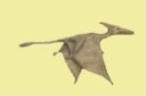
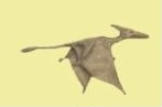
The images of a ropen shown on this page are from a sketch
drawn by the eyewitness Eskin Kuhn (eastern Cuba, 1971)



Credibility of the Umboi
Island Eyewitnesses
Some natives report a flying light at night, others report what other eyewitnesses
have told them, but a few report a huge featherless flying creature in clear daylight
Why we believe eyewitnesses who report a giant
ropen and describe it in terms suggesting a pterosaur
Gideon Koro Interview, 2004
Do pterosaurs still live? Are they extant, even in the 21st century?
Don’t rush to any conclusion; get the facts, then judge credibility.
According to Jonathan David Whitcomb (a legal videographer in
Long Beach, California, at the time he gave this report):
“On October 7, 2004, I left the Gomlongon Village [Umboi Island,
Papua New Guinea] area with my interpreter and some local guides.
We arrived at Akure Village, giving almost no notice to the locals,
who were unaccustomed to seeing a white-skinned man.
“I waited there while someone was sent to get Gideon. It is very
unlikely he had time to prepare for the interview, yet he was at
ease being questioned while being videotaped about his experience
encountering the giant ropen about ten years earlier.
“He acknowledged that he had been interviewed before. I had
studied his previous video-recorded testimony and noticed that
he was much more at ease than he appeared to be years earlier.
“It should be noted that the previous interview may have taken
place soon after the sighting itself took place, so he may have been
nervous being interviewed on camera [the first time].
“These villagers have probably never seen a movie or television
[show] or even a live dramatic play. They are unaware of acting
techniques in the way Westerners are. The many facial expressions
of Gideon during our videotaped interview were highly consistent
with his verbal answers. He was not play acting.
“There is no reasonable possibility that he was willfully giving
false information and that he had not seen any creature like the
one he described. I interviewed him in front of the villagers who
knew him. After I asked him the length of the tail of the ropen, he
looked back and forth at the ground for a few moments and then
he looked back at me and answered emphatically, “sefan meetuh”
(seven meters). He was surely doing this to get a feel for both
what the tail would have looked like if it were stretched out on
the ground and then to estimate the length. . . .
“In regard to any possibility that he firmly believed in a creature
that he thought he saw but which was only . . . an illusion or dream,
we need to consider a broad perspective on this sighting. A specific
hallucinated image does not affect a group but is experienced by an
individual. The ropen sighting involved seven boys. They ran home
in terror after the sighting.
“Wesley, the brother of Gideon, described the ropen to me and I
was able to videotape his answers. . . . Another of the witnesses,
Mesa, told me that he saw the ropen at that time. These videotaped
interviews are available to all who would like to examine them.
[The ropen] was no dream or hallucination.”
See also Ropen Credibility
Michael answered Jonathan Whitcomb’s questions about the
ropen: The flying creature robbed a grave in Gomlongon (1949)
“In December, 1997, my husband and I both sighted a huge
creature flying over a densely populated area, while we were
out walking one night in Perth . . . Australia, on the coastline
around 10:30 pm.”
“Garth Guessman, a living-pterosaur investigator, interviewed
three Americans who had worked in or visited a medical mission
in Central New Britain Island, Papua New Guinea. . . .” [They
had at least three separate sightings, in daylight, of big apparent
pterosaurs, although the flying creatures were apparently not
ropens, for the did not have long tails.]
“Animals that are classified as cryptids seem to be known through
stories or through a limited number of eyewitnesses.”
“An Australian [expert on birds], Mr. Fred F. Silcock, declares
that a few barn owls (Tyto Alba), on rare occasions, glow with
intrinsic bioluminescence.”
Hoaxes (or not)
“In 1856, according to The Illustrated London News (newspaper)
at the time, men working on a tunnel in France discovered a living
pterosaur (by whatever name) . . . is now believed by many to be
a hoax.”



When Whitcomb asked him
about the length of the tail, the
native looked away to imagine
the tail and then estimated its
length. This was done in a
highly credible way.
Wesley’s testimony agreed with
Gideon’s and was consistent in
manner and content (credible)
Gideon Koro, of the Akure
Village area of Umboi
Island, Papua New Guinea
(2004)
Mesa verified that what Gideon said
was true. Although he was nervous
while talking about the creature, his
testimony is considered credible.
When asked if the creature
had any feathers, Gideon
showed nonverbally that he
considered the question
strange: He said, “There’s
no feathers.”

copyright 2007-2017 Jonathan David Whitcomb
Eyewitness descriptions are consistent:
Most of the natives on Umboi Island
see only a distant low-elevation flying
light that lasts about 5-6 seconds. The
islanders who get a closer and clearer
view of the ropen, however, tell us it
is a large long-tailed flying creature.
Let’s try to be objective about reports
of apparent modern pterosaurs
The images of a ropen shown on this page are from a sketch
drawn by the eyewitness Eskin Kuhn (eastern Cuba, 1971)