
Are all Pterosaurs Extinct?



Is it really meaningless to the credibility of standard models whether or not
all species of pterosaurs are extinct? This is a reply to Glen Kuban’s web page.
No hoax
Not misidentified
Pterosaur sketch (above) by the eyewitness Eskin C. Kuhn
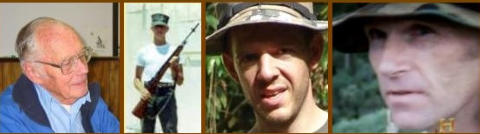
Jonathan Whitcomb Paul Nation Gideon Koro Brian Hennessy Mesa Agustin Duane Hodgkinson Eskin Kuhn David Woetzel Garth Guessman
The testimonies of the above nine men shoot down the assumption that all species of pterosaurs are extinct.
Science and Change
by Jonathan David Whitcomb
“Do nothing to refute mainstream geology”—that phrase
was used in an earlier version of the web page “Living
Pterosaurs,” by Glen J. Kuban. He still says, in his up-
dated July 14, 2017, version, “. . . if they were someday
verified [extant pterosaurs], it would be a wonderful
scientific discovery, but do nothing to undermine
mainstream geology.” He refers to a philosophical
foundation, or basis for interpreting both geological
structures and fossils, a set of assumptions that is not
commonly even acknowledged to be philosophical by
those who use it. The General Theory of Evolution is
a part of that philosophy, and that foundation goes
back to Charles Darwin, in the nineteenth century.
The phrase “mainstream geology,” by Kuban, however,
is a clue that he is actually trying to protect a philosophy,
which includes ideas popularized by Darwin, and this
involves small simple organisms evolving into large
complex ones over very long periods of time.
Real science, by its nature, brings about changes in
opinion about what we used to think: changes. If
many persons consider “mainstream geology” to be
a branch of science, however, why does this geologist
go to so much trouble to protect it? In his July 14th*
version of “Living Pterosaurs (Pterodactyls),” the
character count is 223,163, meaning his online
article contains about 43,757 words (at 5.1 ch. per
word). That is over ten times the length of many
blog posts, longer even than some books. Anyone
with any reasonable degree of objectivity should
be able to see that Mr. Kuban has a passion for
trying to persuade people to disbelieve in any
species of extant pterosaur. But why have so
much concern for protecting old ideas about
geology and evolution? Apparently, he does
not want any person to doubt those old ideas.
I think I have a right to reply to Kuban’s “Living
Pterosaurs,” since my name is mentioned, on
that online *publication, 413 times. Read his
lengthy online page if you like, but then you be
the judge of which point of view is more objective.

Introducing Kuban’s Criticism of
Modern Pterosaur Investigations
Many years ago, Glen Kuban created a web page devoted to
discrediting the idea that pterosaurs have lived in human
times. An in-depth response, to an earlier and smaller version
of his web page, is found in Chapter 23 of the fourth edition
of my nonfiction book Searching for Ropens and Finding
God. That edition of the book was written in 2014, but major
additions were made to “Living Pterosaurs” (by Kuban) in
the spring and summer of 2017, and that deserves attention.
To the best of my knowledge, the year-2013 version of his
web page had about 3500 words, and he did not make any
revisions, as far as I am aware, from 2014 through the end
of 2016 (or they were minor revisions). So why did Glen
Kuban add about 40,000 words to “Living Pterosaurs”
within a period of a few weeks in early 2017? Being a writer
does not grant me the power to read the minds of other
writers, but I have an idea, based upon our email communi-
cations right before he began his prolific writing campaign.
On January 14, 2017, the physicist Clifford Paiva and I
agreed that an old photograph contained a genuine image
of a modern pterosaur. That photo is now called “Ptp,” and
it should not be confused with an imitation photo which is
a hoax. Kuban had, for years, confused the two photos.
Soon after I had informed Kuban of some of the early
discoveries that Paiva and I had made in our examinations
of the Ptp photo, he began major expansions of his web
page. Some of his new paragraphs were about Ptp, with
his reasonings on why the image of an apparent Pteranodon
was not a real animal.
I invite objective readers to compare the writings of Glen
Kuban (in his “Living Pterosaurs” web page) with my own
writings about these wonderful flying creatures. His whole
purpose appears to be to convince people that all pterosaurs
became extinct millions of years ago, although he seems to
reveal a deeper purpose: protecting old ideas about geology
and about Darwin’s philosophy about the origin of life. You
choose for yourself which perspectives are more reasonable.
copyright 2007-2019 Jonathan David Whitcomb
ver-012
Are all Pterosaurs Extinct?
Is it really meaningless to the credibility of standard
models whether or not all species of pterosaurs are
extinct? This is a reply to Glen Kuban’s web page.
No hoax
Not misidentified
Pterosaur sketch (above) by the eyewitness Eskin C. Kuhn



Jonathan Whitcomb Paul Nation Gideon Koro Brian Hennessy Mesa Agustin
Duane Hodgkinson Eskin Kuhn David Woetzel Garth Guessman
The testimonies of the above nine men shoot down the
assumption that all species of pterosaurs are extinct.
Science and Change
by Jonathan David Whitcomb
“Do nothing to refute mainstream geology”—that phrase
was used in an earlier version of the web page “Living
Pterosaurs,” by Glen J. Kuban. He still says, in his up-
dated July 14, 2017, version, “. . . if they were someday
verified [extant pterosaurs], it would be a wonderful
scientific discovery, but do nothing to undermine
mainstream geology.” He refers to a philosophical
foundation, or basis for interpreting both geological
structures and fossils, a set of assumptions that is not
commonly even acknowledged to be philosophical by
those who use it. The General Theory of Evolution is
a part of that philosophy, and that foundation goes
back to Charles Darwin, in the nineteenth century.
The phrase “mainstream geology,” by Kuban, however,
is a clue that he is actually trying to protect a philosophy,
which includes ideas popularized by Darwin, and this
involves small simple organisms evolving into large
complex ones over very long periods of time.
Real science, by its nature, brings about changes in
opinion about what we used to think: changes. If
many persons consider “mainstream geology” to be
a branch of science, however, why does this geologist
go to so much trouble to protect it? In his July 14th*
version of “Living Pterosaurs (Pterodactyls),” the
character count is 223,163, meaning his online
article contains about 43,757 words (at 5.1 ch. per
word). That is over ten times the length of many
blog posts, longer even than some books. Anyone
with any reasonable degree of objectivity should
be able to see that Mr. Kuban has a passion for
trying to persuade people to disbelieve in any
species of extant pterosaur. But why have so
much concern for protecting old ideas about
geology and evolution? Apparently, he does
not want any person to doubt those old ideas.
I think I have a right to reply to Kuban’s “Living
Pterosaurs,” since my name is mentioned, on
that online *publication, 413 times. You be the
judge of which point of view is more objective.


Introducing Kuban’s Criticism of
Modern Pterosaur Investigations
Many years ago, Glen Kuban created a web page devoted to
discrediting the idea that pterosaurs have lived in human
times. An in-depth response, to an earlier and smaller version
of his web page, is found in Chapter 23 of the fourth edition
of my nonfiction book Searching for Ropens and Finding
God. That edition of the book was written in 2014, but major
additions were made to “Living Pterosaurs” (by Kuban) in
the spring and summer of 2017, and that deserves attention.
To the best of my knowledge, the year-2013 version of his
web page had about 3500 words, and he did not make any
revisions, as far as I am aware, from 2014 through the end
of 2016 (or they were minor revisions). So why did Glen
Kuban add about 40,000 words to “Living Pterosaurs”
within a period of a few weeks in early 2017? Being a writer
does not grant me the power to read the minds of other
writers, but I have an idea, based upon our email communi-
cations right before he began his prolific writing campaign.
On January 14, 2017, the physicist Clifford Paiva and I
agreed that an old photograph contained a genuine image
of a modern pterosaur. That photo is now called “Ptp,” and
it should not be confused with an imitation photo which is
a hoax. Kuban had, for years, confused the two photos.
Soon after I had informed Kuban of some of the early
discoveries that Paiva and I had made in our examinations
of the Ptp photo, he began major expansions of his web
page. Some of his new paragraphs were about Ptp, with
his reasonings on why the image of an apparent Pteranodon
was not a real animal.
I invite objective readers to compare the writings of Glen
Kuban (in his “Living Pterosaurs” web page) with my own
writings about these wonderful flying creatures. His whole
purpose appears to be to convince people that all pterosaurs
became extinct millions of years ago, although he seems to
reveal a deeper purpose: protecting old ideas about geology
and about Darwin’s philosophy about the origin of life. You
choose for yourself which perspectives are more reasonable.
copyright 2007-2019 Jonathan David Whitcomb
ver-012